Laurel Olive Branch Vector Line Art
A Designer’s First Glance: Clean, Calm, and Quietly Confident
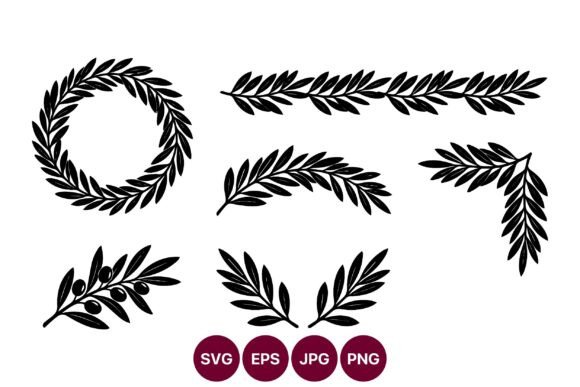
When I opened the Laurel Olive Branch Vector Line Art, my first thought wasn’t “pretty” — it was “purposeful.” This isn’t a fussy, over-rendered botanical illustration. It’s a set of black vector line art elements: olive branches, laurel wreaths, and subtle connecting motifs — all drawn with consistent stroke weight, balanced negative space, and intentional rhythm. There’s no shading, no gradients, no noise. Just confident, clean lines that breathe. That simplicity is exactly what makes it promising for embroidery — especially when you’re stitching on natural fabrics like linen tea towels, organic cotton totes, or unbleached baby onesies.
Real Project Test: A Custom Embroidered Tote for a Local Bakery
Last week, I used the Laurel Olive Branch Vector Line Art as the central motif for a limited-run embroidered tote bag for a neighborhood sourdough bakery. They wanted something earthy but elevated — not floral, not trendy, but timeless enough to hang in their shop for years. I chose a single curved olive branch (from the set) and placed it along the bottom hem of a heavyweight canvas tote. No fill stitches, no appliqué — just a delicate running stitch outline, echoing the vector’s original line quality. The result felt handmade, intentional, and quietly sophisticated. Customers didn’t just notice it — they asked about it. That’s the quiet power of this design: it doesn’t shout; it invites closer looking.
Where It Shines — and Where It Needs Thought
The Laurel Olive Branch Vector Line Art excels in projects where restraint reads as refinement. Think:
- Sweatshirt embroidery — especially on charcoal or oatmeal fleece, where the clean line translates beautifully into satin stitch or dense running stitch
- Embroidered patches — its open structure avoids bulky fill areas, so patches stay flexible and lie flat
- Baby embroidery — on swaddles or bibs, the gentle curves and lack of tight detail feel soft and safe
- Holiday or wedding gifts — a laurel wreath element stitched onto a linen pillow cover or napkin adds ceremonial warmth without cliché
- Boutique branding — works seamlessly as a border on packaging, tags, or woven labels thanks to its vector scalability
But — and this matters — it’s not universally forgiving. On stretchy fabric like jersey tees, fine line work can distort if stabilizer isn’t precisely matched. On dark fabric, thin running stitches may vanish unless thread contrast is carefully chosen (cream or ecru over navy, not white). And on curved surfaces like caps, tight corners in the branch joints need manual digitizing tweaks — the vector gives you the shape, but your embroidery file must honor fabric drape.
What It Does for Your Handmade Product — and Your Customer
This isn’t just decoration. The Laurel Olive Branch Vector Line Art elevates perceived value. Its classical roots (laurel = honor, olive = peace and resilience) lend quiet symbolism — perfect for wellness brands, artisan food makers, or mindful lifestyle shops. Because it’s minimal, it doesn’t compete with texture: it complements burlap, terry cloth, or slubbed linen instead of fighting them. That harmony builds trust. When a customer sees this on a handmade apron or kitchen towel, they don’t think “clip art.” They think “designed.” That distinction directly affects how much someone is willing to pay — and whether they’ll tag your shop in their Instagram story.
Practical Notes Every Embroidery Designer Should Check
Before stitching your first Laurel Olive Branch Vector Line Art project, do these five things:
- Test on scrap fabric — especially if using it for custom apparel or personalized gifts. See how the line weight holds up at your machine’s default stitch length.
- Review stitch density — vector line art often converts to low-density running or satin stitch. If your client expects boldness, consider doubling the outline or adding a subtle shadow stitch.
- Confirm hoop size compatibility — some wreath elements span wide. Measure before committing to a small hoop for caps or babies’ hats.
- Inspect small details — tiny leaf tips or branch endpoints may disappear if scaled too small. Zoom in on your digitized version — not just the vector preview.
- Verify licensing — since this is sold as Graphics in the Illustrations category, confirm whether the license permits commercial use in finished product sales (e.g., on Etsy) or only for personal craft projects.
Final Thought: Less Is Anchored, Not Empty
In a market flooded with busy, over-digitized botanicals, the Laurel Olive Branch Vector Line Art stands out by doing less — and meaning more. It doesn’t try to be everything. It’s not meant for maximalist festival tees or glitter-embellished party hats. It’s for the craft business owner who values integrity over impulse, the Etsy seller who curates rather than crowds, and the designer who knows that a single, well-placed olive branch says more than ten filler motifs ever could. Use it where calm matters. Where craftsmanship shows. Where your customer pauses — then reaches for their wallet.